In today’s digital marketing world, pouring money into ads without a solid strategy is like throwing coins into a wishing well—hopeful but often fruitless. If you’re using Google’s Performance Max (PMax) and AI Max campaigns, you already know their potential is massive. But tapping into that potential requires more than just setting up campaigns and waiting for magic to happen. That’s where a smart SEO approach comes in.
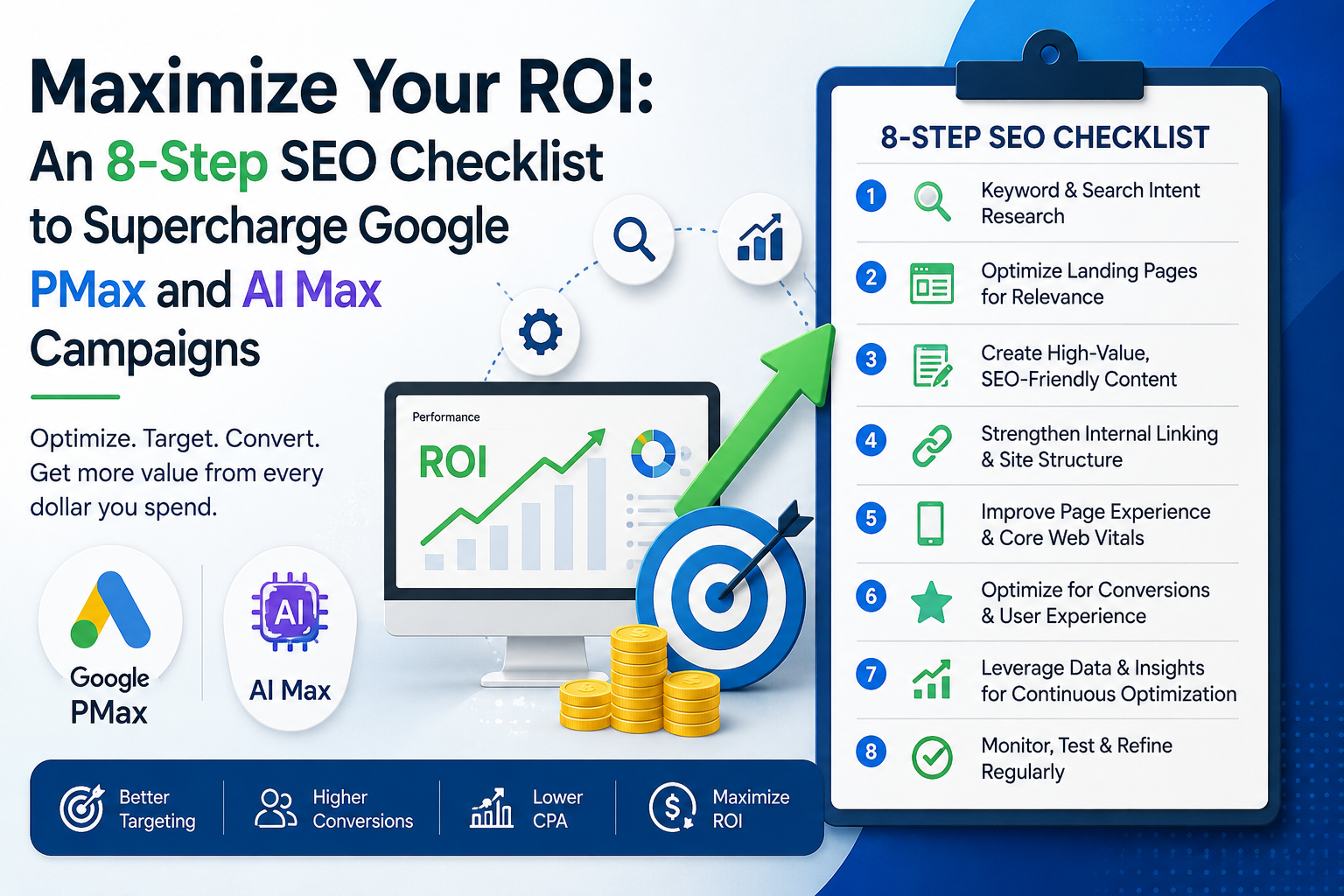
Ready to stop wasting ad spend and start maximizing your ROI? Let’s walk through an 8-step SEO checklist tailored specifically to elevate your Google PMax and AI Max campaigns.
1. Conduct Thorough Keyword Research
Even though PMax campaigns use AI to find audiences, the foundation still lies in the keywords and search intent your content targets. Dig deep to identify high-intent keywords relevant to your products or services. Use tools like Google Keyword Planner, Ahrefs, or SEMrush to spot opportunities your competitors might be missing.
2. Optimize Your Landing Pages
Your ads might get clicks, but if visitors land on poorly optimized pages, your ROI will plummet. Make sure your landing pages are fast, mobile-friendly, and packed with relevant keywords. Clear calls to action and easy navigation are essential to guide visitors towards conversion.
3. Leverage Structured Data
Structured data (schema markup) helps search engines better understand your content. For PMax and AI Max campaigns, this can improve your ad relevance and visibility across Google properties. Implement schema for products, reviews, FAQs, and more to give your pages an SEO boost.
4. Create High-Quality, Engaging Content
Content is still king. Google’s AI rewards pages that genuinely answer user questions and provide value. Develop blog posts, videos, and FAQs that align with your campaign goals. The richer and more informative your content, the better your ads will perform.
5. Optimize for User Experience (UX)
Google’s algorithms increasingly factor in UX signals like page load times, bounce rates, and time on site. Improve your site’s UX by streamlining design, improving navigation, and minimizing intrusive pop-ups. A happy user is a converting user.
6. Harness Audience Signals
While PMax campaigns automate much of the targeting, providing your own audience signals (like custom segments or customer lists) can guide the AI to perform better and deliver higher ROI. Blend your SEO insights with audience data for smarter targeting.
7. Monitor and Analyze Performance Data
Use Google Analytics and Google Ads reports to track how your campaigns are doing. Look beyond clicks and impressions—focus on conversions, bounce rates, and behavior flow. This data will help you tweak both your SEO and paid strategies effectively.
8. Continuously Test and Refine
SEO and paid campaigns are not “set it and forget it” endeavors. Regularly test different headlines, calls to action, landing page elements, and content types. The AI behind PMax and AI Max learns and improves with your input, so keep feeding it fresh data and ideas.
By following these eight steps, you’re not just optimizing SEO—you’re creating a feedback loop that empowers Google’s AI-driven campaigns to work smarter, not harder. The result? More efficient ad spend and a healthier ROI that grows over time.
Remember, the key to success with Google PMax and AI Max lies in the blend: combining your SEO expertise with the power of AI automation. Embrace this synergy, and watch your campaigns transform from cost centers into reliable revenue drivers.
Thanks for reading! Stay tuned for more tips next week on mastering digital marketing strategies that keep your budget lean and your results soaring.

